
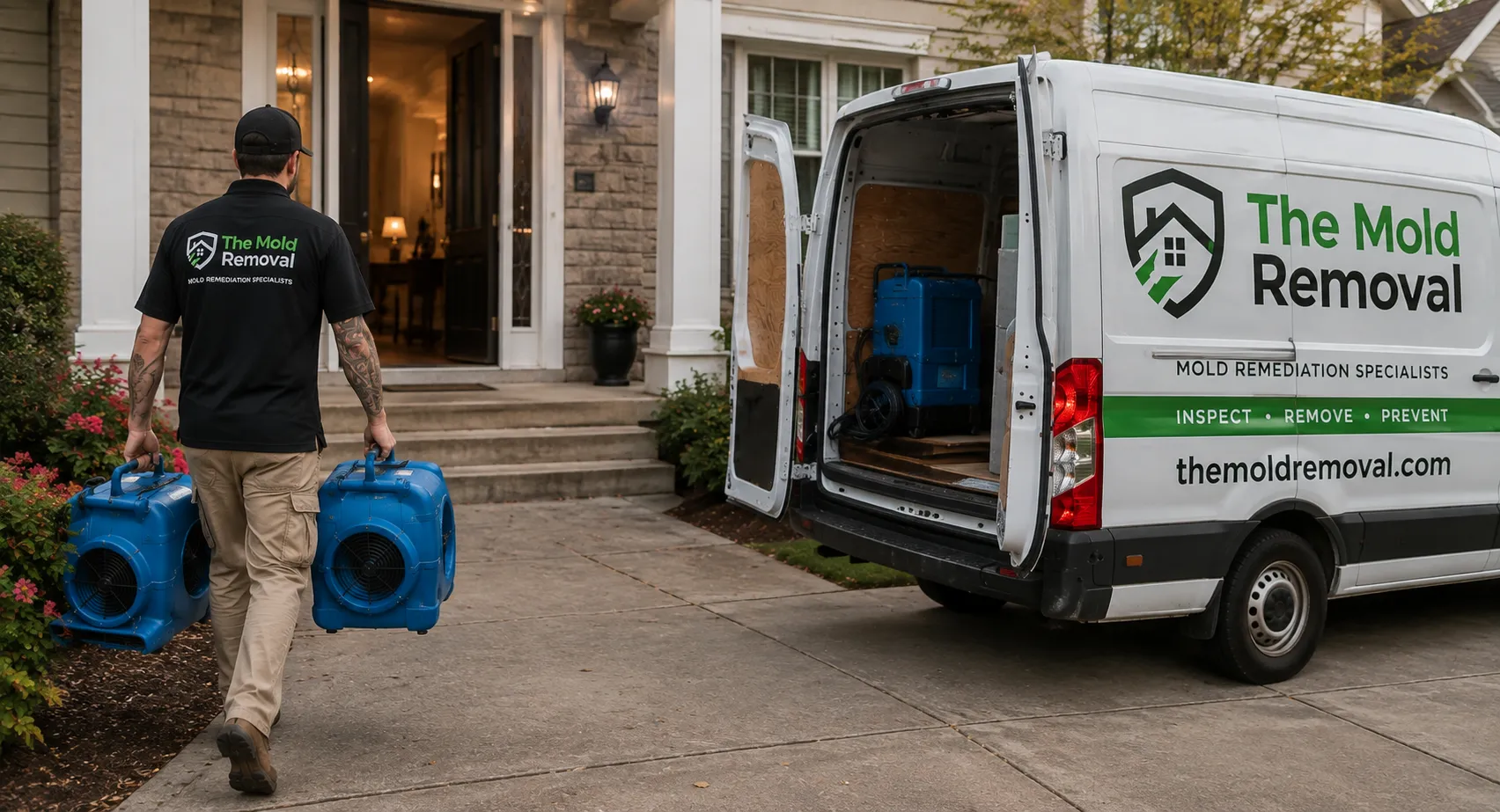
Water Extraction & Drying
Bloomington IN Water Damage Restoration
Emergency extraction, structural drying, and storm or flood recovery — across Bloomington and greater Indiana. Call now to connect with our local pro.
Independent local pros · no-obligation assessment
- 24/7/365 live response from local crews
- Local pros often target a 60-minute response
- Independent local technicians
- Damage documented for your insurance claim — photos, moisture logs, and scope
-
24/7 emergency response
Water emergencies answered around the clock, every day of the year.
-
No lead form
One call, quoted by the pro who visits. Your details are not sold on.
- 24/7/365 live response from local crews
- Local pros often target a 60-minute response
- Independent local technicians
- Damage documented for your insurance claim — photos, moisture logs, and scope
One number reaches independent water damage specialists who work their own region, in every state.
Call (833) 243-4415
Water Damage Restoration - Done in the Right Order
Each stage is performed by the independent restoration contractor the call reaches; IICRC S500 is the industry standard that describes them.
-
Step 1: Extraction
Standing water is pumped out before it can travel further into drywall, subfloor, and framing. Speed here changes the scope of everything that follows.
-
Step 2: Moisture mapping
Meters read the material, not the air, so the wet edge is found even when the surface already looks dry. The map sets what has to come out and what can stay.
-
Step 3: Drying
Air movers and dehumidifiers run as a closed system until readings inside the material reach a dry standard, not until a calendar date arrives.
-
Step 4: Verification
The same points are re-read before equipment comes out. Rebuild starts only after the structure, not just the surface, is confirmed dry.
What drives water into buildings in Bloomington
Our local pros provide water damage restoration services in Bloomington and the surrounding area, including Elm Heights and Bryan Park/Elm Heights. A south-central Indiana city in limestone country, where the surrounding hills hold caves and quarries and the drainage is substantially underground.
Housing stock
Building in Bloomington clusters in the mid 1980s: the median unit dates to 1985, with 56.9 percent finished before 1990. Just over half the housing predates 1990, mixed basement and crawl space construction on karst limestone, alongside a large rental inventory serving the university. Basements cut into this rock can intersect solution features, and where they do the water arrives through the rock rather than through the soil.
Climate and water risk
Of the 49.38 inches that arrive in an average year, 5.41 fall in June; the 1991–2020 normals come from a gauge 0.7 miles away at BLOOMINGTON INDIANA UNIV. June brings the wettest month, and much of what falls disappears into sinkholes and swallets rather than running to a surface stream. That underground drainage moves quickly along routes set by the rock, so heavy rain can surface far from where it fell and enter a basement with nothing visible outside.
Common water damage problems in Bloomington
- Underground drainage through solution features that surfaces far from where the rain fell
- Basements excavated into limestone that may intersect a flow path
- Rental housing on an academic calendar, standing empty when failures go unnoticed
- Quarry and cave country where a century of extraction has opened the rock further
Water Damage Restoration services in Bloomington
Start with standing water, a wet basement, or the storm that just came through. The Water Damage connects you with local Bloomington pros for extraction and drying.
- 24/7 Emergency
Emergency Water Extraction
Standing water is pumped and extracted around the clock to prevent absorption into drywall, subfloor, and framing. Local professionals often target a 60-minute response window, though actual timing varies with area and workload.
Learn more - Fast Response
Structural Drying & Dehumidification
Commercial dehumidifiers and air movers remove moisture from the structure, with daily readings logged from the material itself for claim documentation.
Learn more - 24/7 Emergency
Storm & Flood Recovery
From wind-driven rain to flash flooding, local professionals secure the property, extract standing water, dry the structure, and document all damage for the claim. Interior and exterior stabilization is handled to prevent secondary losses.
Learn more - Fast Response
Groundwater & Basement Intrusion
Basement seepage, failed sumps, and hydrostatic pressure against the foundation are extracted and dried, and the path from the ground is identified so the loss does not repeat.
Learn more - Scheduled
Ceiling & Roof Leak Water Damage
Water-stained or sagging ceilings are professionally dried, treated, and restored after roof failures, plumbing leaks, or upstairs overflows. Moisture is removed from the structure, damaged material is safely taken out, and the area is stabilized.
Learn more
Areas covered around Bloomington
Elsewhere in Indiana: every Water Damage Restoration directory in Indiana.
Frequently asked questions
Water pours into the basement during a storm and stops within the hour.
That pattern points at a solution feature rather than seepage. Karst drainage moves quickly, so when a channel in the rock is running it can deliver a substantial flow into an excavation that intersects it, and then stop just as fast when the pulse passes. Seepage from saturated soil behaves the opposite way, arriving slowly and continuing for days. The timing tells you which one you have and therefore what remedy makes sense.
The house is a rental and nobody is there over the summer.
That is the highest-risk configuration in this city and it is straightforward to manage. A supply failure in an empty house runs until someone arrives, and a summer break is long. Shutting off the water when a unit is vacant costs nothing, and a flow-based automatic shutoff is worth the money across several properties. Neither prevents the failure; both cap the volume, which is what determines the size of the loss.
Is there any way to know if our lot has a solution feature under it?
Not from the surface, which is the difficulty. Karst is irregular by nature, and neighboring lots can be completely different with no visible sign. What is informative is history: whether the basement has taken water before, how quickly it arrived, and whether any depressions have appeared in the yard. Where the question really matters, a geotechnical investigation is the only way to answer it properly.
Bloomington, IN
Standing water in Bloomington?
One free call connects you to a local pro who can extract and dry it — no obligation, no lead form.
Independent local pros · no-obligation assessment
Describe where the water is and you will be connected with an independent pro covering your area. There is no form to fill in and no callback queue.
- Where the water is coming from, if you can tell — a supply line, a roof, a drain, a creek, or the ground
- Whether it is still running, standing, or already soaking into floors and walls
- Whether the property is residential or commercial
- Your city, so the call routes to a contractor covering it