
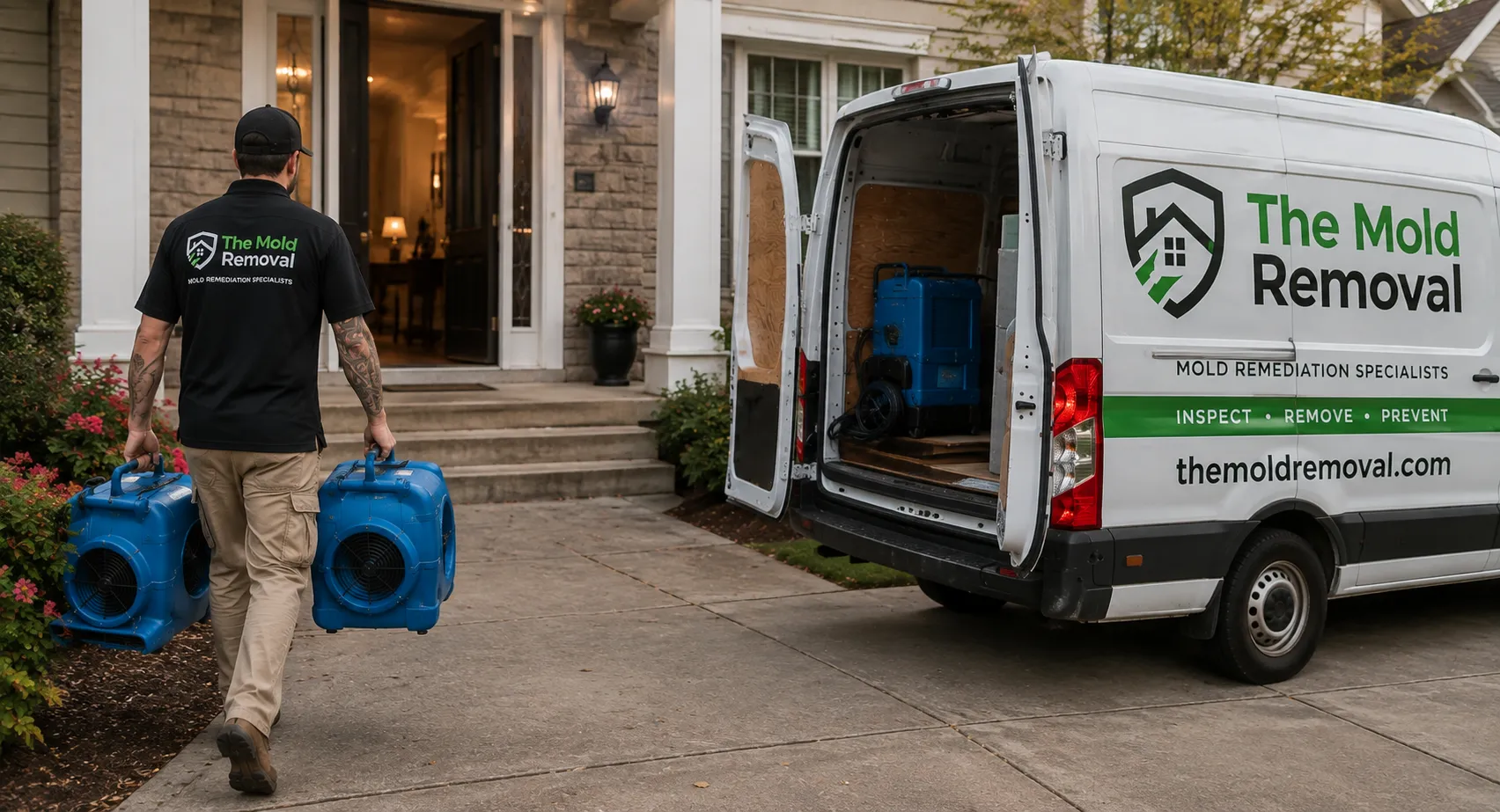
Water Extraction & Drying
Fayetteville NC Water Damage Restoration
Emergency extraction, structural drying, and storm or flood recovery — across Fayetteville and greater North Carolina. Call now to connect with our local pro.
Independent local pros · no-obligation assessment
- 24/7/365 live response from local crews
- Local pros often target a 60-minute response
- Independent local technicians
- Damage documented for your insurance claim — photos, moisture logs, and scope
-
24/7 emergency response
Water emergencies answered around the clock, every day of the year.
-
No lead form
One call, quoted by the pro who visits. Your details are not sold on.
- 24/7/365 live response from local crews
- Local pros often target a 60-minute response
- Independent local technicians
- Damage documented for your insurance claim — photos, moisture logs, and scope
One number reaches independent water damage specialists who work their own region, in every state.
Call (833) 243-4415
Water Damage Restoration - Done in the Right Order
Each stage is performed by the independent restoration contractor the call reaches; IICRC S500 is the industry standard that describes them.
-
Step 1: Extraction
Standing water is pumped out before it can travel further into drywall, subfloor, and framing. Speed here changes the scope of everything that follows.
-
Step 2: Moisture mapping
Meters read the material, not the air, so the wet edge is found even when the surface already looks dry. The map sets what has to come out and what can stay.
-
Step 3: Drying
Air movers and dehumidifiers run as a closed system until readings inside the material reach a dry standard, not until a calendar date arrives.
-
Step 4: Verification
The same points are re-read before equipment comes out. Rebuild starts only after the structure, not just the surface, is confirmed dry.
What drives water into buildings in Fayetteville
Our local pros provide water damage restoration services in Fayetteville and the surrounding area, including University Estates and Drexel / 2773. A Cape Fear River city on the Sandhills, where deep sandy soil meets a humid subtropical summer and three fifths of the housing predates 1990.
Housing stock
Only 39.8 percent of the housing here went up after 1989; the median construction year is 1984. Single-story housing on crawl spaces is the regional default, much of it built through the 1960s and 1980s for a large and mobile military population. A crawl over Sandhills soil drains well most of the year, which means it is rarely inspected until something has been wrong under there for a long time.
Climate and water risk
July is the wettest month here at 5.72 inches, part of an annual 47.93 inches in the 1991–2020 normals from FAYETTEVILLE (PWC), 6.7 miles off. July delivers the wettest month as convective storms over sand that normally accepts them. The trouble comes from tropical remnants, which arrive on this part of the coastal plain with far more rain than the monthly normal suggests and put the Cape Fear and its tributaries over their banks.
Common water damage problems in Fayetteville
- Crawl spaces that drain well ordinarily and are therefore never inspected until damage is advanced
- Tropical remnants delivering many times the normal daily rainfall onto a flat sand plain
- Frequent household turnover, so a slow crawl-space problem passes from owner to owner unnoticed
- Cape Fear tributaries backing into low-lying neighborhoods well away from the main channel
Water Damage Restoration services in Fayetteville
Start with standing water, a wet basement, or the storm that just came through. The Water Damage connects you with local Fayetteville pros for extraction and drying.
- 24/7 Emergency
Emergency Water Extraction
Standing water is pumped and extracted around the clock to prevent absorption into drywall, subfloor, and framing. Local professionals often target a 60-minute response window, though actual timing varies with area and workload.
Learn more - Fast Response
Structural Drying & Dehumidification
Commercial dehumidifiers and air movers remove moisture from the structure, with daily readings logged from the material itself for claim documentation.
Learn more - 24/7 Emergency
Storm & Flood Recovery
From wind-driven rain to flash flooding, local professionals secure the property, extract standing water, dry the structure, and document all damage for the claim. Interior and exterior stabilization is handled to prevent secondary losses.
Learn more - Fast Response
Groundwater & Basement Intrusion
Basement seepage, failed sumps, and hydrostatic pressure against the foundation are extracted and dried, and the path from the ground is identified so the loss does not repeat.
Learn more - Scheduled
Ceiling & Roof Leak Water Damage
Water-stained or sagging ceilings are professionally dried, treated, and restored after roof failures, plumbing leaks, or upstairs overflows. Moisture is removed from the structure, damaged material is safely taken out, and the area is stabilized.
Learn more
North Carolina cities covered are listed on the state page.
Frequently asked questions
We just bought the house. How would we know if the crawl space has a history?
Look for evidence rather than for water. Sandhills soil drains well, so a crawl that flooded last year may be perfectly dry today. What persists is staining on piers and joists, rust lines on ductwork and strapping, displaced or matted insulation, and a vapor barrier that has been disturbed. Any of those means water has been in there, whatever it looks like now, and it is worth metering the framing before assuming it dried without consequence.
Why did a storm well offshore put water in our house?
Because tropical remnants moving inland drop rain far in excess of anything in the monthly normals, and this flat sand plain has limited capacity to move it. Creeks and tributaries of the Cape Fear come up quickly and flood neighborhoods that are not on the main river at all. Flood exposure here follows the small drainages more than the big one, which is why properties well away from the river still take water.
Does a crawl space need to be dried differently from a basement?
Yes, mostly because of access and air movement. A crawl is a low, unconditioned space with poor circulation, and simply putting a fan under there moves humid outdoor air across wet wood. Effective drying means removing standing water, replacing or repositioning the vapor barrier, and running dehumidification in a space that has been closed rather than ventilated. Readings should be taken at the joists and the subfloor, since those are what the house actually rests on.
Fayetteville, NC
Standing water in Fayetteville?
One free call connects you to a local pro who can extract and dry it — no obligation, no lead form.
Independent local pros · no-obligation assessment
Describe where the water is and you will be connected with an independent pro covering your area. There is no form to fill in and no callback queue.
- Where the water is coming from, if you can tell — a supply line, a roof, a drain, a creek, or the ground
- Whether it is still running, standing, or already soaking into floors and walls
- Whether the property is residential or commercial
- Your city, so the call routes to a contractor covering it