
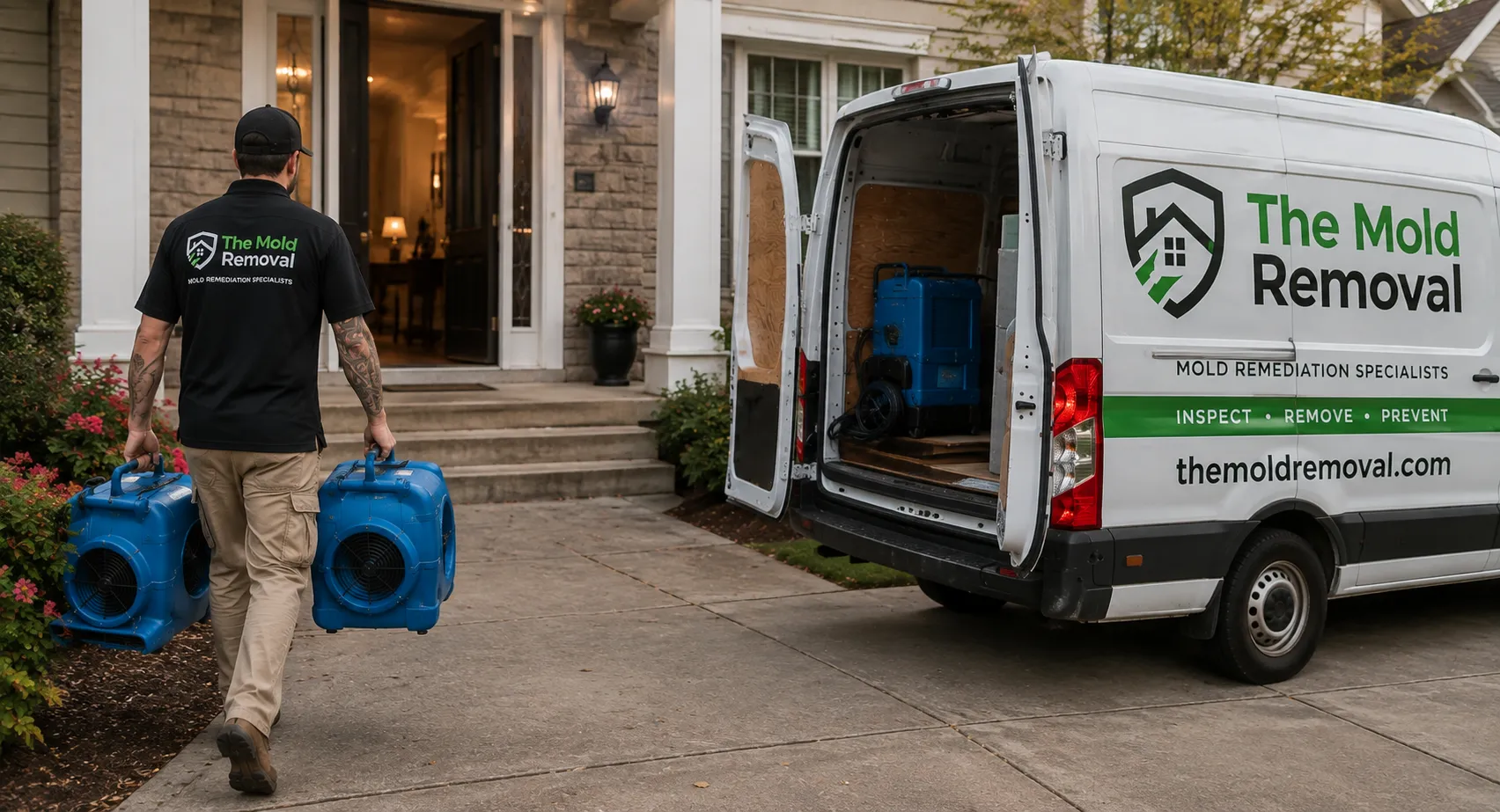
Water Extraction & Drying
Plainfield NJ Water Damage Restoration
Emergency extraction, structural drying, and storm or flood recovery — across Plainfield and greater New Jersey. Call now to connect with our local pro.
Independent local pros · no-obligation assessment
- 24/7/365 live response from local crews
- Local pros often target a 60-minute response
- Independent local technicians
- Damage documented for your insurance claim — photos, moisture logs, and scope
-
24/7 emergency response
Water emergencies answered around the clock, every day of the year.
-
No lead form
One call, quoted by the pro who visits. Your details are not sold on.
- 24/7/365 live response from local crews
- Local pros often target a 60-minute response
- Independent local technicians
- Damage documented for your insurance claim — photos, moisture logs, and scope
One number reaches independent water damage specialists who work their own region, in every state.
Call (833) 243-4415
Water Damage Restoration - Done in the Right Order
Each stage is performed by the independent restoration contractor the call reaches; IICRC S500 is the industry standard that describes them.
-
Step 1: Extraction
Standing water is pumped out before it can travel further into drywall, subfloor, and framing. Speed here changes the scope of everything that follows.
-
Step 2: Moisture mapping
Meters read the material, not the air, so the wet edge is found even when the surface already looks dry. The map sets what has to come out and what can stay.
-
Step 3: Drying
Air movers and dehumidifiers run as a closed system until readings inside the material reach a dry standard, not until a calendar date arrives.
-
Step 4: Verification
The same points are re-read before equipment comes out. Rebuild starts only after the structure, not just the surface, is confirmed dry.
What drives water into buildings in Plainfield
The Plainfield area our local pros cover for water damage restoration takes in the whole city and the streets around it. A Union County city at the foot of the Watchung Mountains, where the median house dates to 1952 and the Green Brook watershed above it has one of the sharpest flood responses in the state.
Housing stock
Of roughly 16,712 housing units, about 14,683 were finished in 1989 or earlier, which puts the median construction year at 1952. Large older frame houses on close lots make up much of the stock, built in the decades when the city was a rail suburb, most with full basements. The Watchung slopes rise immediately above the city, so the housing sits at the base of a watershed that delivers water rapidly rather than gradually.
Climate and water risk
Of the 48.72 inches that arrive in an average year, 5.34 fall in July; the 1991–2020 normals come from a gauge 1.1 miles away at PLAINFIELD. July brings the wettest month, and rain falling on the Watchung slopes reaches the Green Brook system fast, because the terrain is steep and the ground below is largely developed. The result is a stream that responds within an hour of a heavy cell rather than over the course of a day.
Common water damage problems in Plainfield
- A steep Watchung watershed delivering runoff to the Green Brook system within an hour
- Large older houses with full basements at the base of that watershed
- Rapid stream response leaving very little time between the rain and the peak
- Dense development upstream converting a formerly absorbent slope into a shedding one
Water Damage Restoration services in Plainfield
Start with standing water, a wet basement, or the storm that just came through. The Water Damage connects you with local Plainfield pros for extraction and drying.
- 24/7 Emergency
Emergency Water Extraction
Standing water is pumped and extracted around the clock to prevent absorption into drywall, subfloor, and framing. Local professionals often target a 60-minute response window, though actual timing varies with area and workload.
Learn more - Fast Response
Structural Drying & Dehumidification
Commercial dehumidifiers and air movers remove moisture from the structure, with daily readings logged from the material itself for claim documentation.
Learn more - 24/7 Emergency
Storm & Flood Recovery
From wind-driven rain to flash flooding, local professionals secure the property, extract standing water, dry the structure, and document all damage for the claim. Interior and exterior stabilization is handled to prevent secondary losses.
Learn more - Fast Response
Groundwater & Basement Intrusion
Basement seepage, failed sumps, and hydrostatic pressure against the foundation are extracted and dried, and the path from the ground is identified so the loss does not repeat.
Learn more - Scheduled
Ceiling & Roof Leak Water Damage
Water-stained or sagging ceilings are professionally dried, treated, and restored after roof failures, plumbing leaks, or upstairs overflows. Moisture is removed from the structure, damaged material is safely taken out, and the area is stabilized.
Learn more
Not the right city? Browse all New Jersey directories.
Frequently asked questions
How much warning does the brook give when it rises?
Very little, which is the defining local problem. The Watchung slopes are steep and largely developed, so heavy rain reaches the stream system within an hour rather than over a day. By the time the water is visibly high, the peak is close behind it. Any preparation has to be based on the forecast for the watershed rather than on watching the water, which is a hard habit to adopt because it means acting before there is anything to see.
Our basement is deep and old. Is that better or worse?
Worse in one specific way that matters here. A deep basement sits further below the surrounding water table, so during a saturation event it experiences greater pressure on the walls and the floor than a shallow one. Older walls in this stock were built without a drainage layer. The advantage of the space is real, and it argues for keeping mechanicals raised and valuable things off the lowest floor rather than for finishing it out.
Development upstream keeps increasing. Does that change what we should expect?
It does, and the historical record understates the risk as a result. Every acre of the slope that is paved or roofed sheds water that used to soak in, so the same rainfall now produces a larger and faster response than it did decades ago. A property that has been fine for thirty years is not necessarily fine going forward. It is a reason to treat older flood history as a floor rather than as a ceiling.
Plainfield, NJ
Standing water in Plainfield?
One free call connects you to a local pro who can extract and dry it — no obligation, no lead form.
Independent local pros · no-obligation assessment
Describe where the water is and you will be connected with an independent pro covering your area. There is no form to fill in and no callback queue.
- Where the water is coming from, if you can tell — a supply line, a roof, a drain, a creek, or the ground
- Whether it is still running, standing, or already soaking into floors and walls
- Whether the property is residential or commercial
- Your city, so the call routes to a contractor covering it