
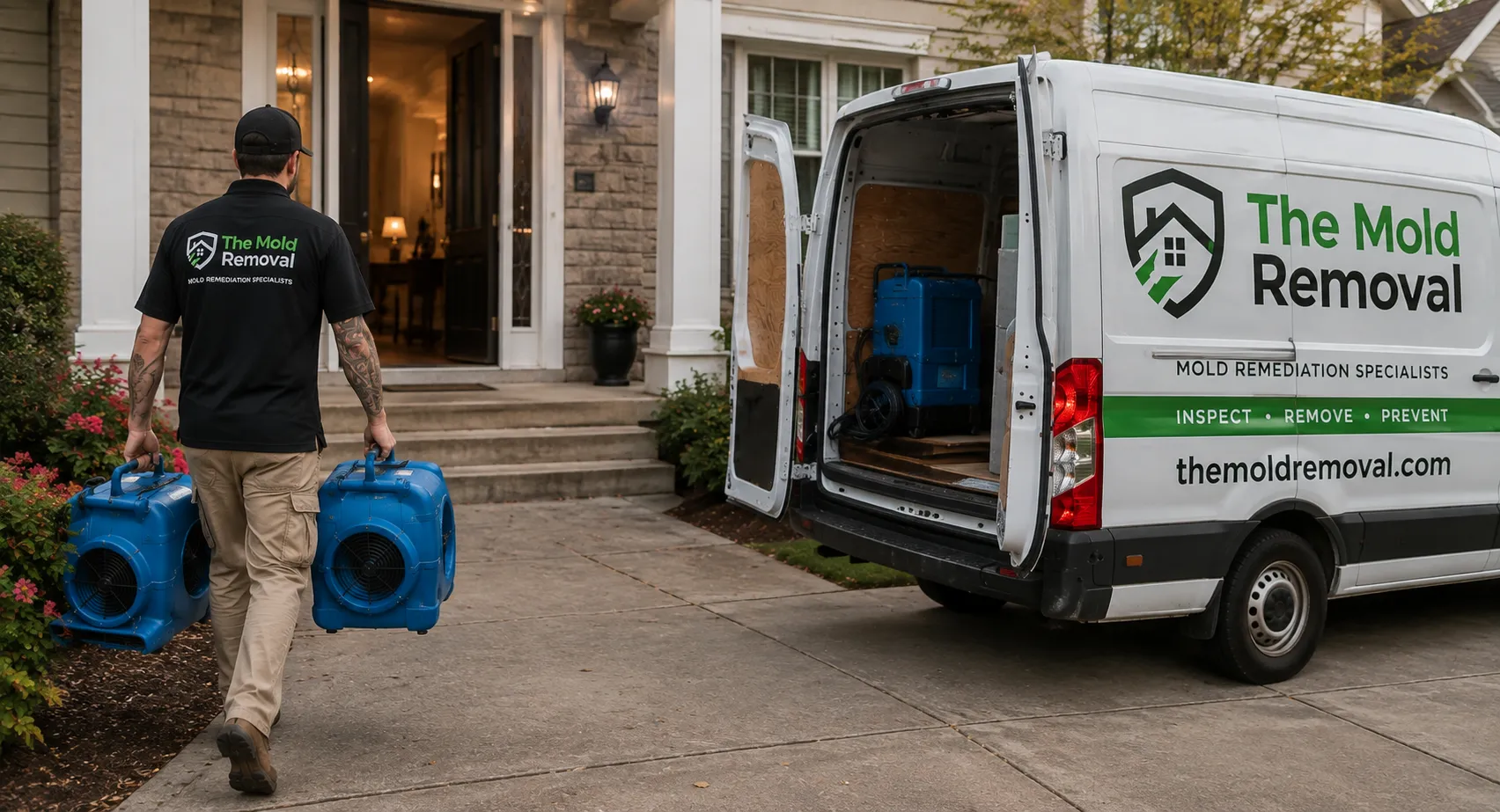
Water Extraction & Drying
Denton TX Water Damage Restoration
Emergency extraction, structural drying, and storm or flood recovery — across Denton and greater Texas. Call now to connect with our local pro.
Independent local pros · no-obligation assessment
- 24/7/365 live response from local crews
- Local pros often target a 60-minute response
- Independent local technicians
- Damage documented for your insurance claim — photos, moisture logs, and scope
-
24/7 emergency response
Water emergencies answered around the clock, every day of the year.
-
No lead form
One call, quoted by the pro who visits. Your details are not sold on.
- 24/7/365 live response from local crews
- Local pros often target a 60-minute response
- Independent local technicians
- Damage documented for your insurance claim — photos, moisture logs, and scope
One number reaches independent water damage specialists who work their own region, in every state.
Call (833) 243-4415
Water Damage Restoration - Done in the Right Order
Each stage is performed by the independent restoration contractor the call reaches; IICRC S500 is the industry standard that describes them.
-
Step 1: Extraction
Standing water is pumped out before it can travel further into drywall, subfloor, and framing. Speed here changes the scope of everything that follows.
-
Step 2: Moisture mapping
Meters read the material, not the air, so the wet edge is found even when the surface already looks dry. The map sets what has to come out and what can stay.
-
Step 3: Drying
Air movers and dehumidifiers run as a closed system until readings inside the material reach a dry standard, not until a calendar date arrives.
-
Step 4: Verification
The same points are re-read before equipment comes out. Rebuild starts only after the structure, not just the surface, is confirmed dry.
What drives water into buildings in Denton
Our local pros take water damage restoration work across Denton, from the middle out to Denton Square and Brentwood Place. A north Texas city between two large reservoirs where the Blackland Prairie meets the Cross Timbers, and three fifths of the housing has gone up since 1990.
Housing stock
A little under half of the housing here predates 1990 — 41.9 percent of it — and construction settles around a median year of 1997. Recent slab construction dominates, on ground that changes character across the city: heavy prairie clay on one side and sandier Cross Timbers soil on the other. That boundary matters, because the two behave differently enough that a remedy suited to one is frequently wrong on the other.
Climate and water risk
May is the wettest month here at 4.86 inches, part of an annual 38.44 inches in the 1991–2020 normals from DENTON 2 SE, 2.5 miles off. May brings the heaviest rain, and where a property sits relative to that soil boundary decides what it does. Prairie clay cracks in dry spells and takes the first inch straight to foundation depth; the sandier ground absorbs and then perches water on clay beneath.
Common water damage problems in Denton
- A soil boundary running through the city, with clay on one side and sand on the other
- Prairie clay cracking to depth and admitting the first inch of a storm to the foundation
- Sandier ground perching water on clay beneath and moving it sideways
- Reservoir releases shaping levels downstream independently of local rain
Water Damage Restoration services in Denton
Start with standing water, a wet basement, or the storm that just came through. The Water Damage connects you with local Denton pros for extraction and drying.
- 24/7 Emergency
Emergency Water Extraction
Standing water is pumped and extracted around the clock to prevent absorption into drywall, subfloor, and framing. Local professionals often target a 60-minute response window, though actual timing varies with area and workload.
Learn more - Fast Response
Structural Drying & Dehumidification
Commercial dehumidifiers and air movers remove moisture from the structure, with daily readings logged from the material itself for claim documentation.
Learn more - 24/7 Emergency
Storm & Flood Recovery
From wind-driven rain to flash flooding, local professionals secure the property, extract standing water, dry the structure, and document all damage for the claim. Interior and exterior stabilization is handled to prevent secondary losses.
Learn more - Fast Response
Groundwater & Basement Intrusion
Basement seepage, failed sumps, and hydrostatic pressure against the foundation are extracted and dried, and the path from the ground is identified so the loss does not repeat.
Learn more - Scheduled
Ceiling & Roof Leak Water Damage
Water-stained or sagging ceilings are professionally dried, treated, and restored after roof failures, plumbing leaks, or upstairs overflows. Moisture is removed from the structure, damaged material is safely taken out, and the area is stabilized.
Learn more
Not the right city? Browse all Texas directories.
Frequently asked questions
How do we tell which kind of ground we are on?
Dig a small hole in the yard during a wet spell and look at what comes out. Prairie clay is sticky, holds its shape, and the hole stays full of water. Cross Timbers soil is sandier, crumbles, and the hole drains. That five-minute test tells you more about which remedy will work than any general local advice, because both conditions exist within this one city.
Should we water the foundation in a drought?
On the clay side, evenly if at all, and evenness is the point rather than volume. Clay damages foundations by moving, and it moves most when one part of the perimeter is much wetter than another. A soaker line run consistently around the whole perimeter is helpful; watering only the beds on one side creates exactly the differential you are trying to avoid. On the sandier side it matters much less.
The reservoir released and the creek came up on a clear day.
Below an impoundment that is expected. Levels downstream reflect operating decisions as well as rainfall, and those are made on the basis of what the reservoir is holding and what is arriving upstream rather than the local sky. Following release information alongside the forecast gives a better picture for property near the water, and usually more warning than watching the weather.
Denton, TX
Standing water in Denton?
One free call connects you to a local pro who can extract and dry it — no obligation, no lead form.
Independent local pros · no-obligation assessment
Describe where the water is and you will be connected with an independent pro covering your area. There is no form to fill in and no callback queue.
- Where the water is coming from, if you can tell — a supply line, a roof, a drain, a creek, or the ground
- Whether it is still running, standing, or already soaking into floors and walls
- Whether the property is residential or commercial
- Your city, so the call routes to a contractor covering it